
Cosmetic peptide INCI and CosIng checks before a bulk order
Match cosmetic peptide trade names, INCI information and supplied composition before purchasing. Understand what CosIng establishes and what needs a separate review.
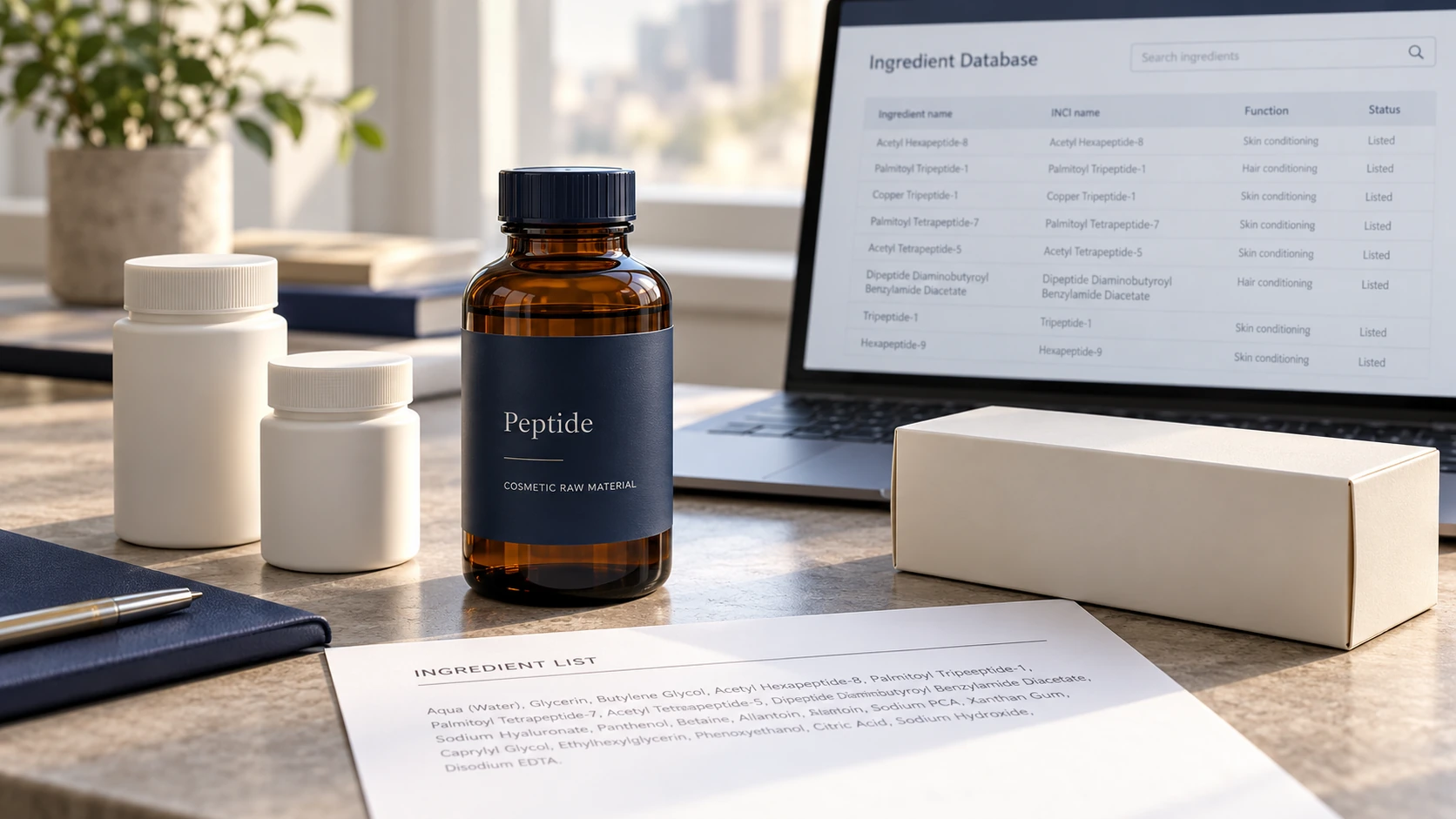
For business purchasing and quality teams. References checked 31 October 2026.
Connect the trade name to the supplied composition
A cosmetic peptide order should identify the ingredient actually supplied. Record the supplier’s trade name, proposed INCI information, relevant chemical identifiers and composition. A peptide powder and a solution sold under similar names can require different purchasing and label records.
Ask whether the offered material is a single substance or a mixture. For a mixture, request the component information and quantitative details needed by the responsible assessor and labelling team. Preserve the supplier’s product code and specification revision so that a later formulation or label review uses the same material definition.
Separate commercial and ingredient names
A brand-facing trade name can help identify a supplier’s product. The INCI information supports a different task: identifying ingredients using the applicable nomenclature. Keep both in the product file and document their relationship. A familiar trade name does not resolve an incomplete composition declaration.
Use CosIng as an information source with defined limits
The European Commission’s CosIng notice states that the database is informative and has no legal value. An INCI name appearing in its inventory does not establish approval for cosmetic use. The notice points to Regulation (EC) No 1223/2009 and its annexes for the conditions under which substances may be used.
Save the search terms, matched record and date of the check. Compare the proposed identity with the record’s identifiers and any linked information. If the match is unclear, obtain a documented explanation from the supplier or the responsible specialist before using the result in a purchasing decision.
A screenshot of an inventory entry should therefore be filed as a search record. Keep any separate regulatory assessment and supporting product documentation alongside it. This prevents a database search from becoming an unsupported “EU approved” statement in a quotation or label brief.
Build a review file that the next team can use
Procurement often sits between the ingredient supplier, formulator and regulatory assessor. A usable handover gives those teams the same product definition and identifies who must resolve each open item. The following list is a purchasing file structure; the assessor determines the evidence required for the intended market and product.
| File item | Question for the handover |
|---|---|
| Supplier trade name and code | Which commercial material was quoted and sampled? |
| Composition declaration | Which substances and carriers are supplied? |
| INCI information and identifiers | How does the supplier identify each relevant ingredient? |
| Specification and COA | Which quality limits and batch records define the purchase? |
| Safety and technical documentation | What information can the assessor review for the proposed use? |
| Destination and intended product | Which market and product assessment is being requested? |
| Change notification | Who will notify a change affecting composition or documents? |
Where composition details are confidential, agree a secure route for disclosure to the responsible assessor. Record any access restriction before accepting the supply arrangement. Use the confidentiality agreement to give the assessor access to the composition details needed for review.
Keep ingredient review connected to finished-product review
The EU Cosmetics Regulation addresses finished-product responsibilities as well as ingredients. Article 10 concerns the safety assessment, while Article 19 addresses labelling. Use the current official text and relevant amendments when the responsible person and assessor evaluate a proposed product. An ingredient file alone cannot complete those finished-product tasks.
Review the claims actually planned
Give the reviewer the intended product format, market and proposed claims. A raw-material supply discussion can become misleading if a technical description is copied onto a consumer label without checking the finished product. Ask the reviewer to assess the proposed cosmetic classification using the ingredient, finished-product format and planned claims.
Request support for the claims relevant to the proposed product. Avoid turning a supplier’s broad ingredient description into a product-specific efficacy statement. Record which information belongs to the raw material and which relates to the finished formulation under review.
Check the final ingredient declaration
Reconcile the label proof with the formulation and approved ingredient information. Include carriers and other supplied components as applicable to the final declaration. Return a mismatch to the responsible labelling team before artwork is released.
Control composition changes after qualification
Agree how changes to the supplied material will be communicated. Relevant changes can concern component identity, the carrier system, specification or documentation. The responsible team should assess whether an existing formulation, safety file or label record needs revision before a changed material is accepted.
- Keep an approved baseline of the material’s composition and documents.
- Record the proposed change and the first affected batch.
- Identify the products and markets using the material.
- Obtain the required reviews and record their conclusions.
- Connect accepted changes to purchasing and artwork records.
Use the cosmetic peptide sourcing guide for the wider purchase file. Compare material definitions in CAS numbers and identity, and connect the outcome to label-claim review and change control. Include the intended market and ingredient-document needs in a wholesale enquiry.
Frequently asked questions
Does a CosIng inventory entry mean a cosmetic peptide is approved in the EU?
No. The European Commission states that an inventory listing does not establish approval. Review the applicable Cosmetics Regulation, annexes and product-specific assessment.
Is the supplier’s trade name enough for the ingredient declaration?
Keep the trade name connected to the supplied composition and applicable INCI information. The responsible labelling team must determine the declaration for the finished product.
What should be requested for a peptide ingredient supplied as a solution?
Request the composition information needed to identify the peptide and supplied carriers or other components, together with the product code, specification and applicable supporting documents.
Who should assess a proposed cosmetic peptide for a destination market?
Identify the responsible regulatory and safety-assessment functions for the intended product and market. Procurement should provide the supplier records and keep their conclusions connected to the purchase.